
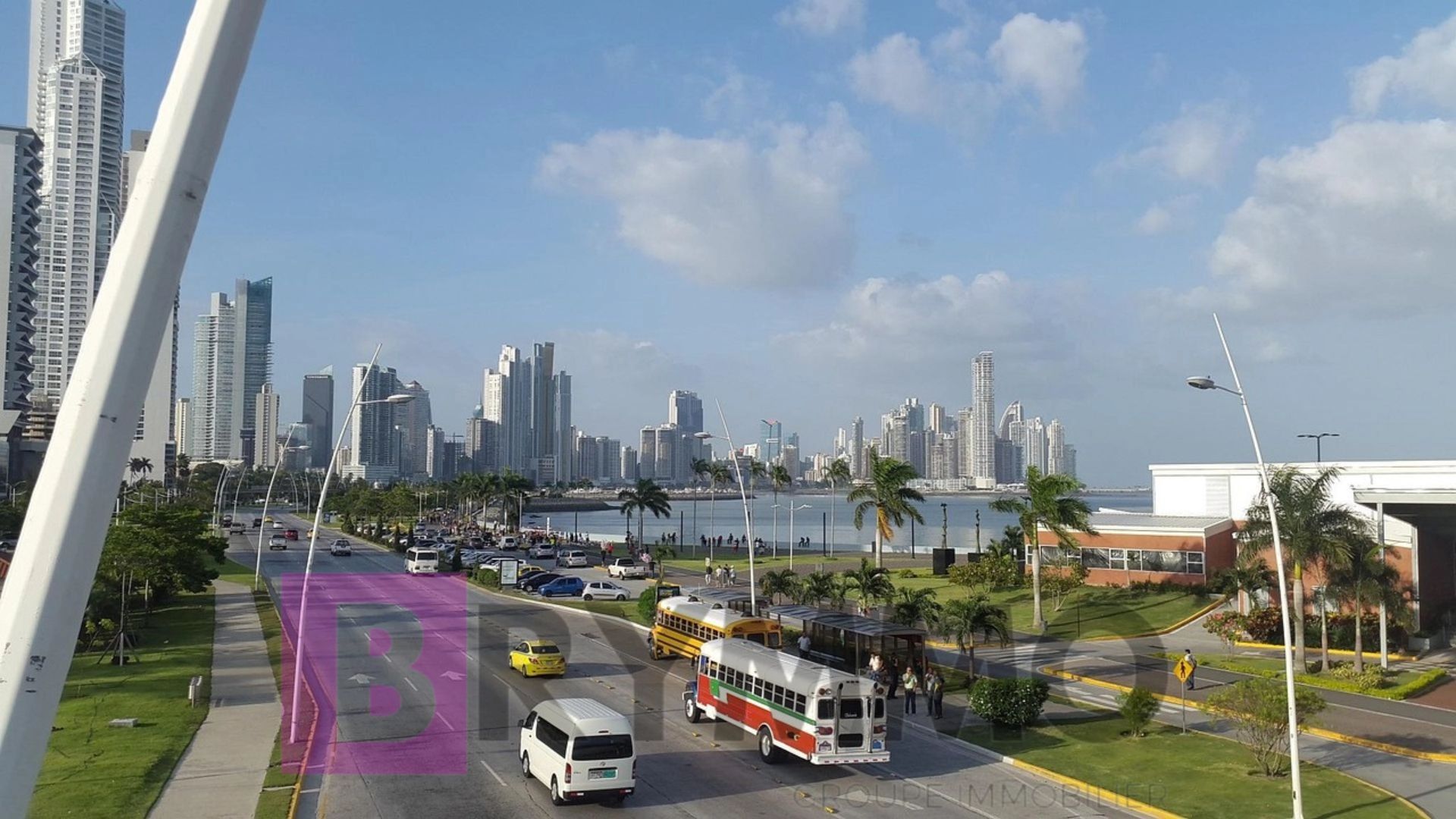
Panama attracts a growing number of investors and foreign individuals every year, drawn by its economic stability, favorable tax system, and open-door policy toward international buyers. Located at the crossroads of the Americas and powered by the Panama Canal as an economic engine, the country has become a strategic destination not only for businesses, but also for retirees, real estate investors, and families looking for a sunny lifestyle and tax advantages to invest in Panama under the sun.
A legal framework that favors foreigners
One of Panama’s major strengths in real estate is its foreigner-friendly legislation. Since Law 54 of 1998, a clear principle applies: foreigners enjoy the same property rights as Panamanian citizens. Unlike other Latin American countries, there are no restrictions based on nationality, land area, or the number of properties that can be acquired.
In practical terms, a Swiss citizen can buy, rent, transfer, or resell a property in Panama under the same conditions as a local, which greatly simplifies planning a real estate project or a long-term move. Panamanian law does, however, provide several legal statuses for holding property, each with its own features, advantages, and limitations.
Why invest in Panama?
For a Swiss investor, real estate in Panama can meet three main goals:
- Primary or secondary residence: enjoy a tropical lifestyle with a lower cost of living than Switzerland.
- Rental investment: diversify your assets and generate income in US dollars in a growing market.
- Retirement planning: benefit from specific programs that make relocation easier and offer attractive tax and social advantages.
Understanding the local market:
Before buying, it is essential to understand Panama’s legal framework, as well as the tax and wealth-planning implications for a Swiss national. This guide covers:
- The possible types of ownership: titled properties, rights of possession, and concessions.
- The steps in the purchase process, from legal checks to official registration.
- The tax and wealth-planning aspects you need to know.
- Visa and residency options to make your move easier.
With this approach, investing in Panama becomes not only a financial opportunity, but also a life experience in a dynamic and welcoming country.
The different ways to acquire real estate in Panama
1. Buying titled properties
In Panama, buying a titled property remains the most secure form of real estate acquisition. These properties are recorded in the National Public Registry, the equivalent of the Swiss land registry, ensuring full traceability and maximum legal protection. It is also the only route that allows you to finance the purchase with a mortgage.
Key benefits:
- Full legal security: the State officially recognizes the owner, greatly reducing the risk of disputes.
- Ability to mortgage the property: useful to finance projects or invest further.
- Optimal value appreciation: a titled property inspires confidence among foreign buyers, making resale easier.
The purchase process:
- Initial agreement: the buyer and seller agree on the price, often with the help of a Panamanian lawyer who drafts a formal purchase contract.
- Promise to purchase: this contract generally includes a deposit and allows the buyer to verify the property’s legal status. The lawyer ensures the seller is the true owner and that no debt, tax, or dispute affects the property. A surveyor can confirm the exact boundaries of the land.
- Signing the final contract: the deed of sale is signed before a notary, and the final payment is often handled through an escrow account for added security.
- Registration with the Public Registry: this step formalizes the transfer of ownership, giving the buyer full rights to the property.
Practical example: For a Swiss investor looking to buy an apartment in Panama City or a villa in a residential neighborhood, purchasing a titled property is almost always the standard choice. It provides legal protection comparable to what is known in Switzerland, while also offering the ability to increase the property’s value and resell it easily.
2. Rights of Possession (ROP – Rights of Possession)
In addition to land with an official title deed, it is possible in Panama to acquire rights of possession over land owned by the State. These legally recognized rights allow an individual to occupy, improve, and use public land. They can be passed on to heirs, sold to third parties—including foreigners—and, in some cases, converted into a property title.
The main advantage of rights of possession is that they are exempt from property tax, since the land remains State-owned. However, buildings constructed on the land remain taxable. These rights cannot be mortgaged and are not recorded in the Public Registry, making them less secure than an official title. The lack of a centralized database can sometimes lead to disputes when multiple people claim the same land.
The acquisition process is more complex than a standard purchase. After signing a promise to purchase before a notary, thorough due diligence is essential: verification of the possession certificate with the competent authority, review of the topographic plan signed by a licensed surveyor, physical inspection of the land, and confirmation that there are no conflicts or objections. Then, the parties sign a notarized purchase-and-sale contract, and the possession certificate is transferred to the buyer. In some cases, it may be easier to acquire the shares of a company holding the certificate rather than request the reissuance of a new document.
Key features of rights of possession:
- Transferable and inheritable, and sometimes convertible into a property title.
- Generally located in coastal, island, or rural areas.
- Exempt from property tax, since the land technically remains State-owned.
Precautions before acquisition:
Before any purchase, it is essential to verify the validity of the documents, identify any potential disputes, and assess the possibility of conversion into a titled property. This requires a legal investigation, a topographic verification, and a physical inspection of the land.
Practical use:
Some investors choose to acquire a right of possession through a Panamanian company. This approach makes management easier, protects the investor’s liability, and prepares for potential estate planning.
3. Real estate concessions
In Panama, certain particularly attractive areas—beaches, islands, or protected zones—are reserved for the State, and private ownership is prohibited. To encourage tourism and commercial development, the State offers concessions, i.e., temporary usage rights over public land. These concessions allow investors to benefit from a strategic location without becoming the owner, providing a flexible and legal solution to launch a project.
Key points to know:
- Term: concessions are generally granted for 20 years, renewable. In some tourist areas, they can reach 40 years, providing sufficient stability for large-scale projects.
- Specific use: each concession is limited to a specific activity, such as building a hotel, creating a marina, or developing a tourist complex. The goal is to optimize land use while complying with environmental and urban-planning regulations.
- Transfer and assignment: unlike a traditional property, the land cannot be transferred as private ownership. However, the concession contract can be assigned or transferred to a third party under certain conditions, offering investors some flexibility.
Why choose a concession?
Concessions are particularly suited to investors who want to benefit from Panama’s economic and tourism growth without seeking to build a traditional landholding portfolio. They allow you to:
- Access strategic locations that are otherwise difficult to obtain.
- Test a commercial project before committing long term.
- Minimize certain costs and constraints linked to land ownership, while complying with local legislation.
Precautions to take when investing in Panama:
As with any investment, it is essential to verify the validity of the contract, the exact term and renewal conditions, as well as the authorized use of the land. Legal and administrative due diligence is strongly recommended to avoid unpleasant surprises.
4. Investment vehicles: companies and trusts
In Panama, it is common not to buy a property in your own name, but through a local company (S.A. – Sociedad Anónima) or a trust.
Why use a company or a trust?
- to make property management easier, especially in the case of multiple rental investments,
- to optimize wealth transfer (for example, transferring the company’s shares rather than the property itself),
- to benefit from enhanced confidentiality, since the company appears as the owner in the Public Registry,
- to take advantage of more flexible taxation in certain cases.
Practical example: a Swiss investor who wants to buy several apartments to rent out can create a Panamanian company that holds all of the properties. This centralizes management, structures rental income more effectively, and makes resale of the assets more flexible.
In summary for investing in Panama:
Panama offers Swiss investors a range of real estate holding structures, allowing them to choose based on their objectives: asset security, investment opportunity, tourism development, or estate and tax optimization.
Four main options:
Titled properties: The most secure solution, recorded in the Public Registry. It offers maximum legal security and allows the purchase to be financed with a mortgage—ideal for a residential asset or a second home.
Rights of possession: Accessible to foreigners and often less expensive, they allow you to occupy and improve public land. However, they require increased vigilance regarding the legality of documents and the absence of disputes.
Concessions: Intended for temporary commercial use in strategic areas (beaches, islands, tourist zones). Ideal for tourism or commercial projects, they allow you to develop an investment while complying with local regulations.
Companies and trusts: Used to optimize taxation, protect assets, or facilitate estate planning, they offer additional flexibility for managing real estate. For example, an investor can acquire a property through a Panamanian company or place ownership in a trust, which can simplify inheritance and protect assets against certain risks.
The choice among these options will depend on the buyer’s objectives: securing a residential asset, investing in rental property, developing a tourism project, or organizing estate planning. Each structure has its advantages and limitations, and it is essential to understand Panama’s legal framework to make an informed decision.
Overall real estate purchase process in Panama for a Swiss buyer
Buying real estate in Panama may seem complex at first glance, but the process is actually structured and relatively standardized. Whether the goal is a primary residence, a rental investment, or a retirement home in the sun, there are essential steps that ensure the transaction’s legal security.
Here is the typical process for buying real estate in Panama:
1. Identifying the property
The first step is naturally to choose the property that fits your project, whether for:
A primary residence: expats often favor secure residential neighborhoods in Panama City, Pacific beach areas (Coronado, Playa Blanca), or cooler regions such as Boquete.
A rental investment: city apartments (especially near business districts or universities) are in demand, as are tourist properties in coastal and island areas.
Retirement: buyers tend to opt for houses or condos in quiet areas, with accessible medical infrastructure and an expat community.
Practical tip: it is recommended to visit several properties, compare prices by area, and work with a local agent who knows the legal specifics well (especially the difference between titled properties and rights of possession).
2. Due diligence (legal and cadastral checks)
This step is undoubtedly the most important. Before committing, the buyer must appoint a Panamanian lawyer to carry out full due diligence.
This includes:
- verifying the property title or possession certificate,
- checking cadastral boundaries and compliance of the topographic plan,
- reviewing any mortgages, tax debts, or disputes linked to the property,
- confirming that the seller is the registered owner and has full rights to sell.
Unlike Switzerland, where the land registry provides absolute security, in Panama it is essential to protect yourself with an independent legal review.
3. Offer and promise to sell
Once the checks are satisfactory, the buyer can make an offer. This is often formalized through a promise to sell (Promesa de Compraventa) drafted by a lawyer and signed before a notary.
This promise sets the price, the transaction conditions, and the deadline for the final signing.
An initial deposit, generally around 10% of the purchase price, is paid by the buyer.
The contract also specifies the conditions for refunding or forfeiting the deposit in case of withdrawal.
In practice, this step corresponds to a preliminary sales agreement in Switzerland.
4. Escrow
To secure payment, it is customary to use an escrow account managed by a bank or by the lawyer handling the transaction.
The buyer deposits the balance of the purchase price there.
Funds are released to the seller only once the transaction is officially registered, which prevents fraud.
This practice, very common in international transactions, is particularly reassuring for foreign buyers.
5. Signing before the notary
The final purchase-and-sale contract (Escritura Pública) is then signed before a Panamanian notary.
The notary plays a key role: they verify identities, the legality of the contract, and ensure that all conditions are met.
Unlike Switzerland, where the notary often acts as a representative of the State and advises both parties, in Panama the notary is more of a formal guarantor of the transaction. Therefore, the buyer’s lawyer remains the main protector of the buyer’s interests.
6. Registration with the Public Registry
The final step is registering the property with the Public Registry.
For a titled property, the transfer of ownership is effective only once this registration is completed.
For a right of possession (ROP), registration with the Public Registry is not possible: the transfer is done via a notarized contract, and it is crucial to keep the original certificates and proof of possession.
This formality is essential: without registration, the buyer is not legally recognized as the owner of the property.
In summary, the real estate purchase process in Panama is based on 6 key steps: choose the property, verify its legal status, sign a promise to sell, secure payment via escrow, sign before a notary, and register the property with the Public Registry.
With the support of a competent local lawyer and a good understanding of the differences between titled properties and rights of possession, Swiss buyers can invest in Panama safely—whether for a residence, a rental project, or a peaceful retirement.
Taxation applicable to investing in Panama
Investing in real estate in Panama involves understanding local taxation, which is relatively simple but includes several layers depending on the type of transaction and how the property is used. For a Swiss national, this knowledge helps anticipate costs and plan the investment optimally.
1. Transfer tax
When purchasing real estate, a transfer tax is applied to the sale price. It corresponds to 2% of the total transaction amount and must be paid by the buyer at the time of the transfer of ownership. This fixed tax makes financial planning easier.
2. Annual property tax
Panama also levies an annual property tax, calculated on the property’s cadastral value. It can reach up to 2.1% depending on the property’s value. Partial or full exemptions exist, notably under the “Family Patrimony” program, which exempts properties up to USD 120,000. This provision is particularly attractive for primary residences or family homes.
3. Capital gains tax
In the event of resale, Panama applies a capital gains tax. The rate varies depending on the seller’s status:
- 10% for individuals,
- up to 27% for brokers,
- 30% for companies.
It is possible to reduce this tax burden by selling via the shares of a real estate company, which can bring the effective rate down to 5%.
4. Rental income
Income from renting out a property is also subject to tax. However, an exemption threshold of USD 30,000 per year applies. Above this amount, rental income is taxed at a progressive rate that can reach 27%, depending on the amount received.
Tax and legal considerations for Swiss nationals investing in Panama
Investing in real estate in Panama can be very attractive, but it is important for Swiss nationals to understand the tax and legal implications in their home country. Switzerland taxes worldwide income, which means that all income generated abroad—including rent and capital gains from a Panamanian property—must be declared to the Swiss tax authorities.
1. Declaring rental income and capital gains
If you receive rental income from a property in Panama, it must be included in your Swiss tax return. Likewise, selling a Panamanian property that generates a capital gain can have tax implications, even if you have already paid taxes in Panama.
2. No comprehensive tax treaty
Panama and Switzerland do not have a comprehensive bilateral tax treaty. This means there is no automatic mechanism to avoid double taxation. As a result, investors must anticipate and plan for this situation to avoid paying tax twice on the same income or gain.
3. Tax optimization and advice for investing in Panama
To limit double taxation and secure your investment:
- It is strongly recommended to work with a specialized tax advisor who understands both Swiss law and Panamanian legislation.
- Using legal structures such as companies or trusts can sometimes help organize income, protect assets, and optimize taxation.
- Advance planning is essential for long-term investments, especially for those considering generating regular rental income or reselling the property in several years.
4. The importance of documentation when investing in Panama
Keep all contracts, receipts, tax returns, and proof of payment related to your properties in Panama. These documents will be essential for your Swiss tax return and to prove that you have met your obligations in both countries.
In summary, a real estate investment in Panama for a Swiss national can offer attractive opportunities, but it requires rigorous tax planning to avoid surprises and optimize returns.
Visas and residency through investment
Panama is particularly attractive to foreign nationals thanks to its flexible visa programs and a legal framework favorable to real estate investment. Whether you want to settle long term, prepare for retirement, or manage a rental property, several options are available to investors.
1. Permanent resident visa to invest in Panama
The permanent resident visa allows a foreign national to live in Panama indefinitely. Several routes exist:
- Real estate investment: purchasing a property with a minimum value, often around USD 300,000, can serve as a basis for obtaining permanent residency.
- Business creation: investing in a company or an economic project in Panama can also open access to this type of visa.
This status offers many advantages for investing in Panama, including the ability to work legally, access local healthcare services, and open Panamanian bank accounts.
2. Retiree visa or “Pensionado” program
Panama offers a special program for foreign retirees called Pensionado, which provides attractive tax and social benefits:
- Discounts on medical care, transportation, and certain local services.
- Simplified entry requirements and facilitated permanent residency.
- The ability to receive Swiss or international pensions while benefiting from a favorable tax framework.
This visa is ideal for those who want to enjoy a pleasant lifestyle, while having a clear legal framework for their residency and real estate assets.
3. Temporary visa or extended tourist stay
For investors who do not yet want to settle permanently, Panama also offers temporary visas or extended tourist stays, allowing you to remain for several months while assessing the real estate market or managing a rental property.
4. Process and requirements to invest in Panama
Obtaining a visa involves:
- Preparing a complete file with legal documents, proof of income, and purchase or investment contracts.
- Assistance from a Panamanian immigration lawyer is strongly recommended to secure and speed up the process.
- Complying with local obligations, particularly tax and administrative requirements, to avoid any legal issues.
Conclusion on investing in Panama
Buying real estate in Panama as a Swiss national is an accessible and secure process, provided you follow local formalities and surround yourself with competent legal advice. Key strengths include the diversity of property statuses (titled, ROP, concessions), competitive taxation, and the possibility of quickly obtaining residency through investment. However, it is essential to consider Swiss tax obligations and protect yourself against double taxation.
In summary: Panama offers Swiss buyers a strategic opportunity for residency, investment, and wealth diversification, within a favorable legal and tax framework. Contact us to invest in Panama under the best possible conditions.